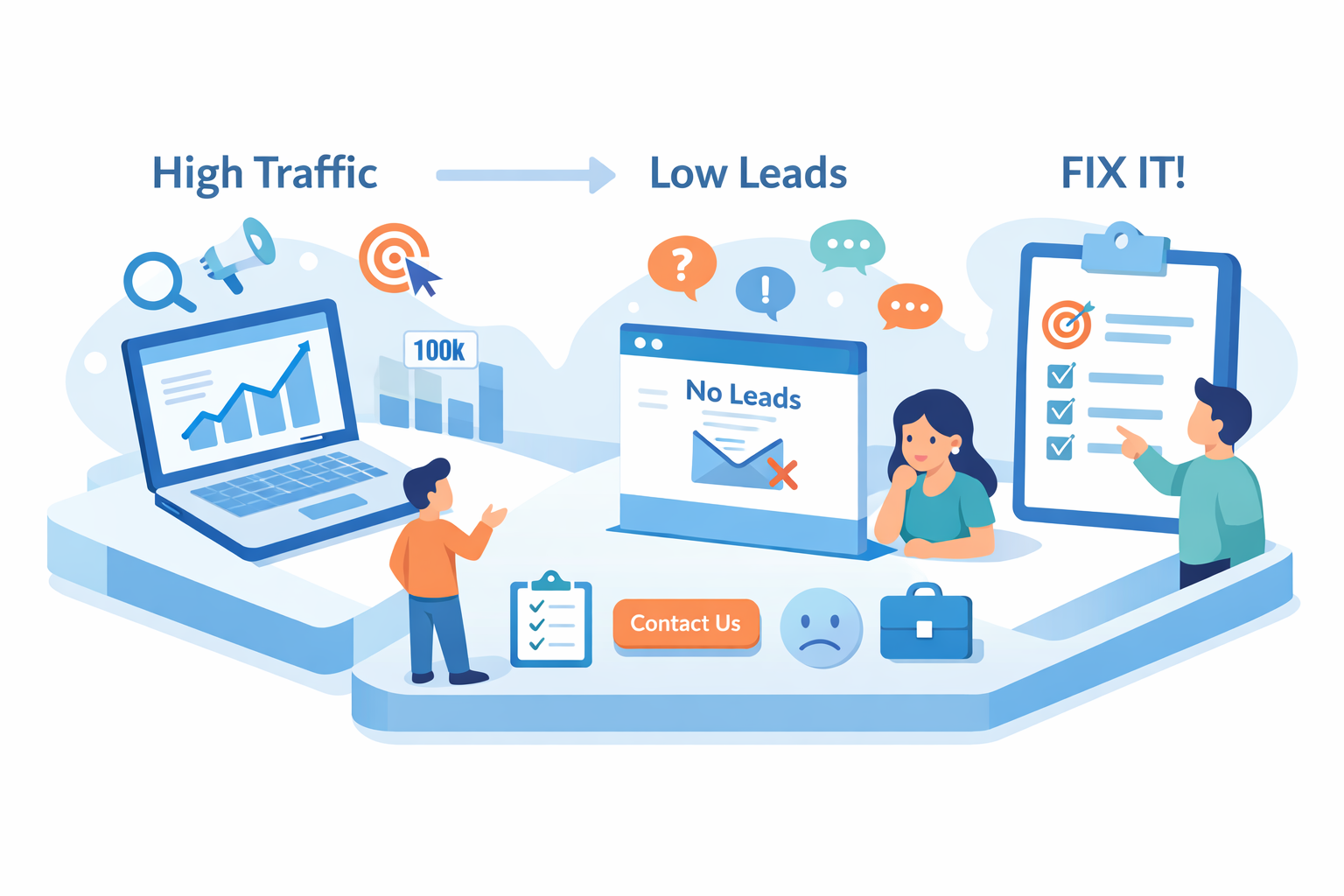
If your website traffic looks great in Google Analytics but your leads are disappointing, you’re not alone. In fact, this is one of the most common problems I’ve seen in my 10 years working in SEO and growth marketing.
Moreover, this issue often frustrates founders and marketers because it feels like success. Rankings are up. Sessions are growing. Therefore, leads should follow—right? Unfortunately, traffic alone doesn’t pay the bills.
Let’s break down why high traffic doesn’t automatically mean high leads, based on real projects, real mistakes, as well as real fixes that actually work.
You’re Attracting the Wrong Type of Traffic
This is the #1 reason I see, especially with SEO-led growth.
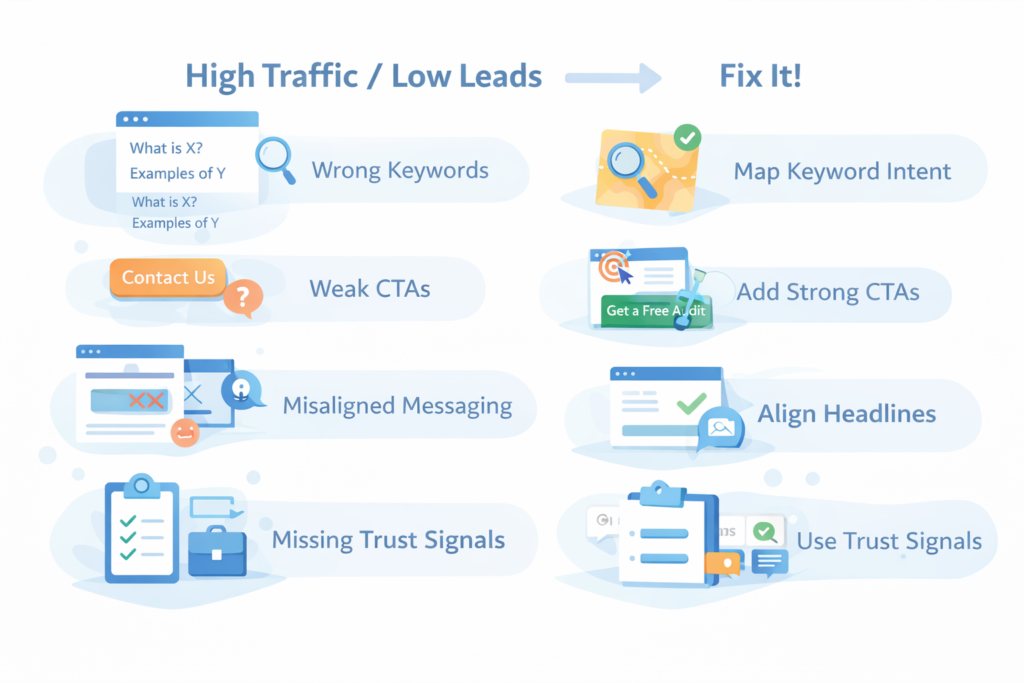
Many websites rank well for informational keywords, not buyer-intent keywords. As a result, traffic increases but conversions stay flat.
Real-world example
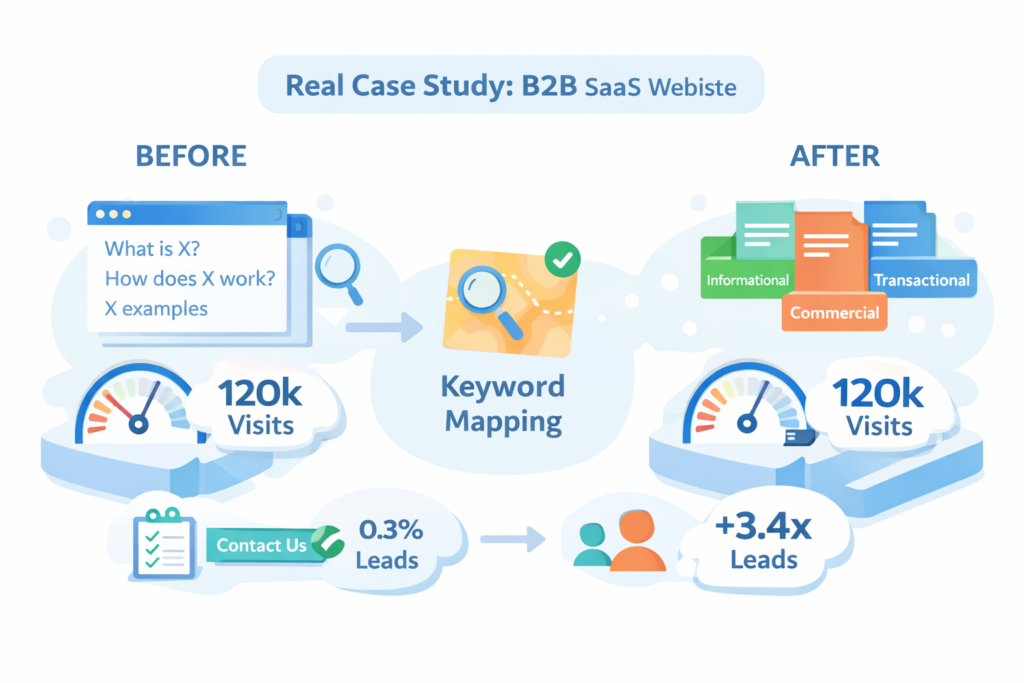
I once worked with a B2B SaaS company getting over 120,000 monthly visits. However, less than 0.3% converted into leads. Why?
They ranked mostly for:
- “What is X?”
- “How does X work?”
- “X examples”
These keywords bring curious readers but not buyers.
Fix:
We mapped keywords by intent:
- Informational → blog content
- Commercial → comparison pages
- Transactional → landing pages
Therefore, traffic quality improved, and leads increased by 3.4x without increasing total sessions.
Your Content Solves Problems but Doesn’t Sell Solutions
High-traffic pages often educate well but fail to guide users toward the next step.
Many SEOs (including earlier versions of myself) focus heavily on ranking and forget conversion paths. Also, blog posts often end without a clear call-to-action.
Common mistake
- Great content
- No strong CTA
- Or a generic “Contact Us” link
Fix:
Every high-traffic page should answer this question:
What should the reader do next?
Effective CTAs I’ve seen work:
- “Get a free audit”
- “See how this applies to your site”
- “Download the exact checklist we use”
Moreover, context matters. A CTA should match the page’s intent.
Your Messaging Is Misaligned With User Intent
You may be speaking to the wrong pain point.
For example, traffic lands on your page looking for a solution to one problem, but your headline talks about something else entirely. As a result, users bounce or scroll without converting.
What I’ve noticed repeatedly
- SEO brings the user in
- Copy pushes them away
Fix: Rewrite headlines and above-the-fold copy to reflect the keyword intent, address the immediate pain and show a clear outcome.
Therefore, conversions often improve without changing design or traffic sources.
Your Trust Signals Are Weak or Missing
People don’t submit forms unless they trust you.
High traffic but low leads often means users don’t feel safe or confident enough to convert.
Missing trust signals include case studies, client logos, testimonials and also real numbers and results.
Case insight
For a service business, simply adding:
- 3 short case studies
- Specific metrics (e.g., “47% lead increase in 60 days”)
led to a 62% increase in form submissions, with the same traffic.
Moreover, vague claims like “We help businesses grow” rarely convert.
Your Offer Isn’t Compelling Enough
Sometimes the problem isn’t traffic or design—it’s the offer.
If your only conversion option is “Contact us” or “Book a demo” (for cold traffic), you’re asking for too much, too soon.
Fix:
Use low-friction offers, especially for SEO traffic:
- Free audits
- Templates
- Checklists
- Mini tools
Therefore, you capture leads earlier in the funnel and nurture them later.
Your Forms Create Friction
This is a silent conversion killer.
I’ve seen websites with 8–10 required fields, confusing labels and no explanation of what happens next. As a result, users abandon the form.
Best practice from experience:
- Ask only what you need
- Explain why you need it
- Set expectations (“We’ll respond within 24 hours”)
Also, test shorter forms on mobile. Mobile traffic is often high but converts poorly due to UX issues.
Mobile Experience Is Hurting Conversions
Traffic is increasingly mobile-first. However, many websites still design for desktop conversions.
Common mobile issues:
- Tiny CTAs
- Slow load times
- Popups blocking content
- Forms that are painful to fill
Therefore, even high mobile traffic won’t convert.
Fix:
Review your top pages on a real phone, not just emulators. This simple step has uncovered major issues in many audits I’ve done.
You’re Measuring the Wrong Metrics
High traffic looks good on reports, but it’s often a vanity metric.
What actually matters is conversion rate by page, traffic by intent, assisted conversions and lead quality.
I’ve seen teams chase more traffic when the real problem was poor conversion paths.
Moreover, sometimes leads are coming in—but tracking is broken.
Your Pages Lack Clear Direction
Many pages try to do too much:
- Sell multiple services
- Target multiple audiences
- Cover multiple goals
As a result, users don’t know what action to take.
Fix:
One page = one primary goal.
Therefore, clarity often beats creativity when it comes to conversions.
What I Fix First When Traffic Is High but Leads Are Low?
Based on real projects, here’s the order that usually works best:
- Analyze keyword intent vs conversion pages
- Improve above-the-fold messaging
- Add strong, relevant CTAs
- Introduce trust signals and case studies
- Simplify forms and offers
- Fix mobile UX issues
Only after this do I worry about increasing traffic further.
Final Thoughts
High traffic with low leads is not an SEO failure—it’s usually a conversion and also an intent alignment problem.
SEO brings people to your site. However, conversion strategy turns them into customers.
Therefore, instead of asking “How do we get more traffic?”, start asking:
“Are we giving the right visitors a clear, trustworthy reason to convert?”
Fix that, and your traffic will finally start working for your business.

Leave a Reply