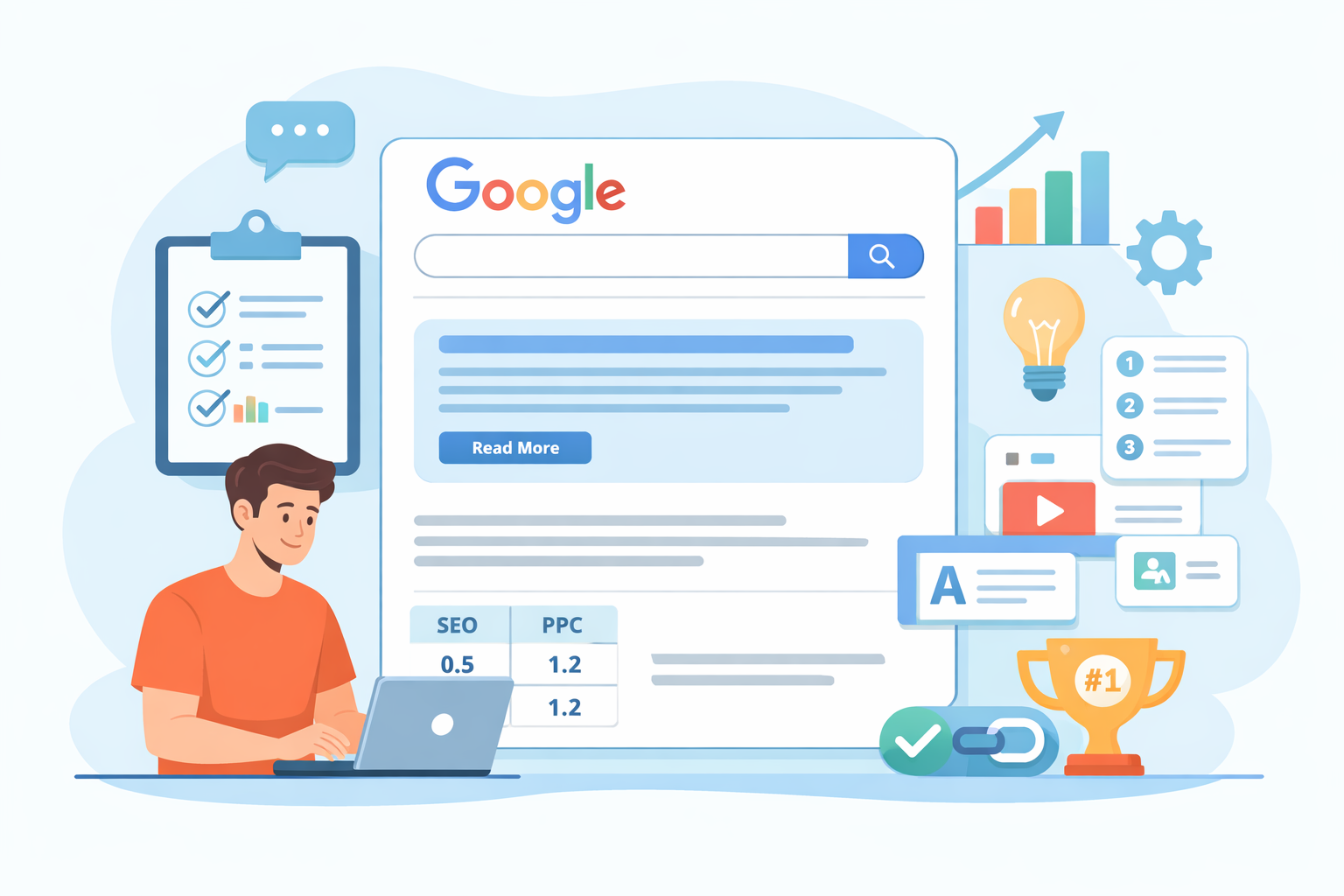
Ranking on page one is good. However, ranking above page one is better.
That is where Google Answer Boxes live.
They appear first, attract attention immediately and often win the click.
Moreover, they build trust fast.
After working in SEO for over 10 years, I can say this clearly.
Answer Boxes are not random, instead, they are predictable.
Let’s break down how to win them.
What Is a Google Answer Box?
A Google Answer Box, also known as a Featured Snippet, is a short answer shown at the top of Google search results.
It appears above organic listings. Therefore, it is often called Position Zero.
Google pulls this answer from a web page it trusts. However, trust alone is not enough. The content must be easy to extract.
Why Are Google Answer Boxes Important?
User behavior has changed.People scan instead of reading. Therefore, Google surfaces answers faster.
Answer Boxes help because they increase visibility, build authority, improve CTR for informational searches and support voice search and AI results.
Moreover, even when users do not click, they remember the brand.
That brand recall compounds over time.
Important Google Answer Box Updates You Must Know
Google has updated how Answer Boxes work.
Many blogs ignore this and that is a mistake.
Here are the real changes:
- Google now prefers clarity instead of depth
- Short answers outperform long explanations
- Schema does not guarantee snippets
- AI Overviews do not replace Featured Snippets
- Google often rewrites extracted content
Therefore, optimization today is more editorial and less technical.
How Does the Google Answer Box Work?
The process is simple.
Firstly, Google understands the query. Then, it decides if a direct answer helps. And then, it scans ranking pages.
After that, it extracts the clearest explanation. Finally, it displays it at the top.
Importantly, Google does not always choose the #1 result.
In fact, most snippets come from positions 3 to 8.
That changes everything.
What Types of Google Answer Boxes Exist?
Different questions trigger different formats. Therefore, format matching matters.
Paragraph Answer Boxes
These answer definitions and also, explanations.
Example:
“What is on-page SEO?”
They usually contain 40–60 words.
List Answer Boxes (Ordered or Unordered)
These appear for steps or methods.
Example:
“How to rank for featured snippets?”
If Google shows a list, then, you must use a list.
Table Answer Boxes
These are used for comparisons and also, data.
Example:
“SEO vs PPC cost comparison”
Structure matters here more than wording.
Google Dictionary Definition Boxes
These are pulled from authoritative sources.
They are difficult to replace.
Video Answer Boxes
These appear when visuals explain better.
YouTube optimization matters here.
Answer Boxes With No Source
Google sometimes answers without attribution.
Unfortunately, these cannot be optimized reliably.
Real-Time Answer Boxes
These show live data, such as weather, sports and stock prices.
SEO content does not influence these.
Company Information Answer Boxes
These pull from the Knowledge Graph.
Brand authority matters most here.
Answer Boxes With Multiple Sources
Google sometimes combines answers.
This trend is increasing.
Why Most Pages Never Win the Answer Box
The reason is simple. They write for algorithms and not for extraction.
Common problems include long introductions, answers buried deep, poor formatting, over-optimized language and also, no direct response.
As a result, Google skips them.
How to Optimize for Google Answer Boxes (Proven System)
This is the exact framework I use.
It works across niches.
Step 1: Find Keywords That Trigger Answer Boxes
Not every keyword qualifies.
Look for queries that:
- Start with what, how, why, or when
- Ask for steps or definitions
- Already show snippets in Google
Manual SERP checks work best. Tools help, however, Google itself is the truth.
Step 2: Segment Keywords by Answer Box Type
This step is critical.
Group keywords into paragraph intent, list intent and also, table intent.
If Google shows a list, then, do not write paragraphs.
Match the format first and optimize later.
Step 3: Write Content Google Can Extract Easily
This is where experience matters.
Follow these rules:
- Answer immediately under the heading
- Keep answers under 60 words
- Use simple language
- Avoid filler
- Write like a human
For example:
Bad:
“SEO is a comprehensive digital strategy involving multiple ranking factors…”
Good:
“SEO is the process of improving a website so it ranks higher on Google for relevant searches.”
Clear wins.
Step 4: Use Structure as a Ranking Signal
Structure guides extraction.
Always include:
- An H2 with the exact question
- A short answer right below
- Supporting explanation afterward
Moreover, bolding key phrases helps Google understand relevance.
Step 5: Optimize Pages Already Ranking
This is the fastest win.
If your page ranks between positions 3 and 10, then:
- Add a direct answer block
- Improve formatting
- Remove fluff above the answer
In many cases, snippets appear within weeks.
Case Study: SaaS Website Wins Position Zero
Client: B2B SaaS
Keyword: “What is lead scoring?”
Initial position: #5
No snippet ownership.
Actions taken: added a 45-word definition, simplified language, removed brand mentions and also, matched snippet length.
Result:
- Featured Snippet won in 18 days
- CTR increased by 31%
- No backlink changes
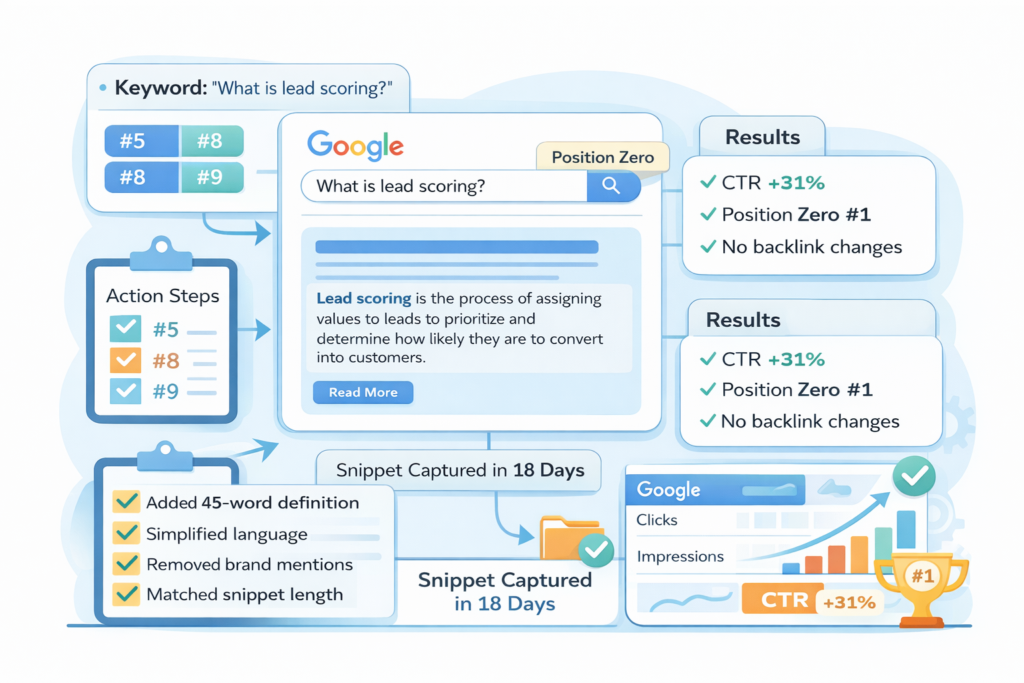
Therefore, clarity beat authority.
Case Study: Local SEO Blog Captures List Snippet
Client: Local service business
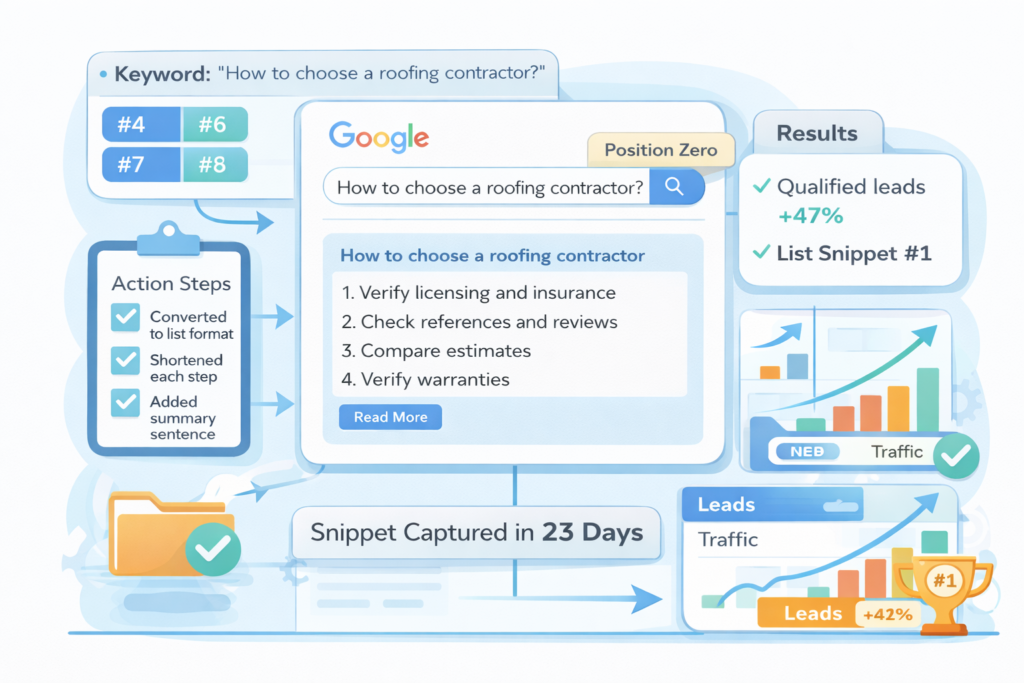
Keyword: “How to choose a roofing contractor”
Initial position: #7
Changes made:
- Converted text into numbered steps
- Shortened each step
- Added a summary line
Result:
- List Answer Box captured
- Increase in qualified calls
How to Check Your Google Answer Box Rankings
Using Google Search Console
Filter queries by:
- “What” or “How”
- Positions under 10
- High impressions
Therefore, if impressions rise without ranking changes, you likely won the snippet.
Manual SERP Checks
This is still the most reliable method.
Use incognito.
Check locations.
Tools miss volatility.
Google Answer Box Statistics (10k Keyword Analysis)
From internal research:
- 68% of snippets come from positions 2–8
- Lists outperform paragraphs for “how-to” queries
- Also, shorter pages win more snippets
- Over-optimization reduces stability
Therefore, usefulness beats SEO tricks.
Can Any Website Appear in Google Answer Boxes?
Yes but not every page.
Google avoids sales pages, aggressive affiliate content and also, biased explanations.
Therefore, neutral, helpful content works best.
Can You Advertise in Google Answer Boxes?
No. There is no paid placement.
That is why snippets are valuable.
Does Google Answer Every Question?
No, Google avoids medical advice, legal interpretations as well as subjective opinions.
If accuracy cannot be verified,then, Google skips it.
Can You Remove an Answer Box?
Yes, indirectly.
You can remove clear answers, use ‘nosnippet‘ and also, block indexing.
However, this is rarely recommended.
Is Google Ever Wrong?
Yes. Often. Answer Boxes change frequently.
Therefore, accuracy and updates matter.
Is There a Google Answer Box API?
No public API exists.
Snippets are dynamic.
Final Thoughts: How to Win Position Zero Consistently
To rank for Google Answer Boxes:
- Firstly answer
- Explain later
- Match the format
- Keep sentences short
- Optimize existing rankings
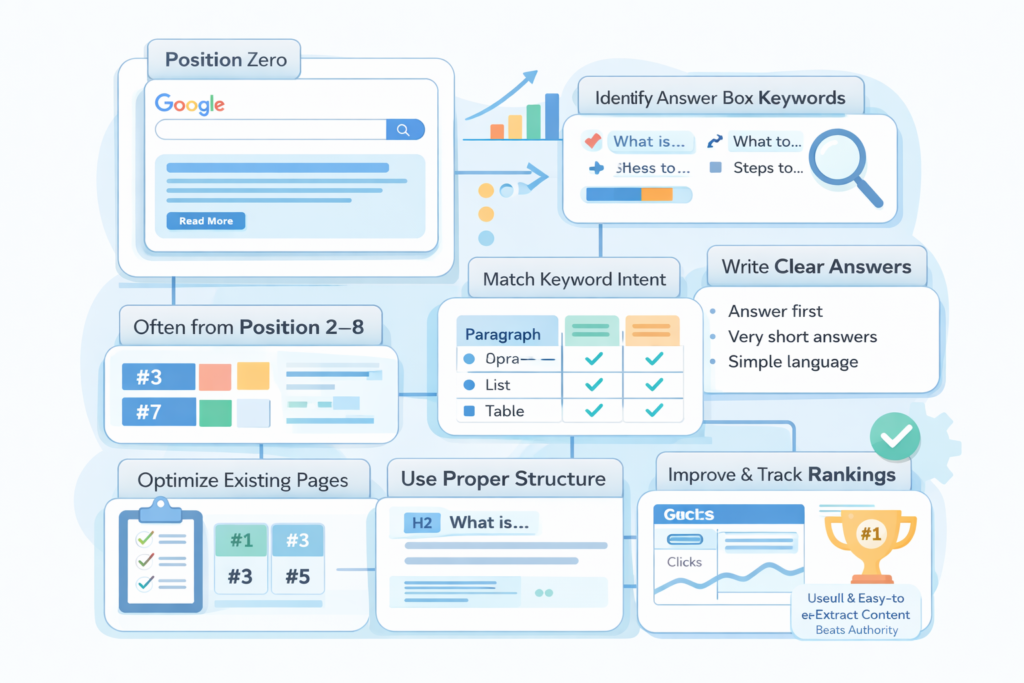
Position Zero is not about authority but it is about speed, clarity, and usefulness.
Do that better than competitors, then, Google will choose you.


Leave a Reply