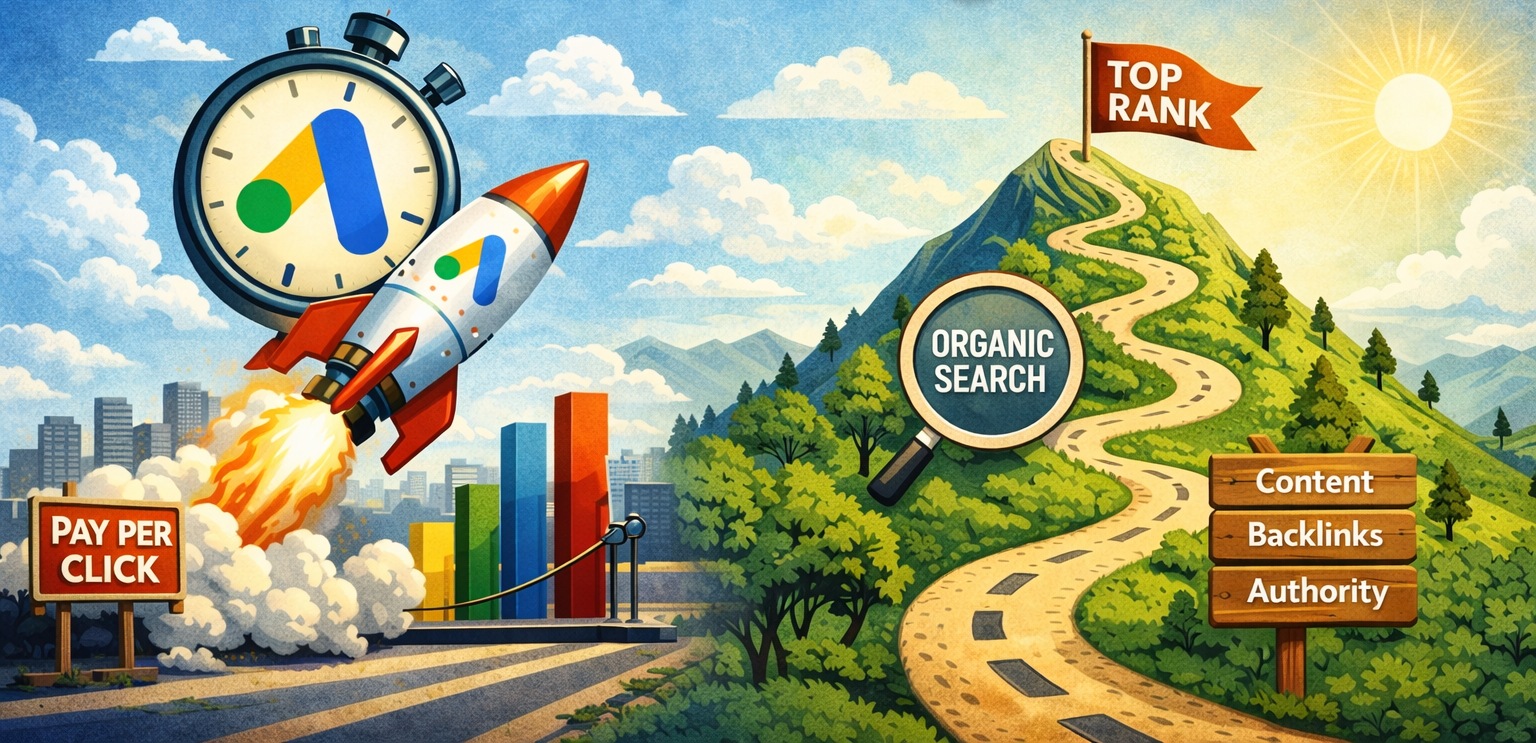
Many business owners ask a very fair question:
“If I’m already running Google Ads, do I really need SEO?”
At first glance, the logic makes sense. Google Ads bring instant traffic, predictable leads, and also clear tracking. Therefore, SEO can feel slow, uncertain, and optional.
However, after working with businesses across industries and managing both Google Ads and SEO side by side, the short answer is this: Yes, SEO is still necessary—even if Google Ads are performing well.
The long answer is where things get interesting, practical, as well as profitable. Let’s break it down without fluff.
Why Google Ads Feel Like Enough (At First)?
Google Ads are powerful. There’s no denying that.
You pay, your ad appears, and traffic starts flowing. Moreover, Ads give you control—budgets, keywords, locations, and messaging can all be adjusted quickly.
This is why many businesses start with Ads only. They need leads fast, want measurable ROI and don’t want to “wait” for SEO.
And honestly, in the short term, this approach can work.
However, relying only on Google Ads creates risks that most businesses don’t see until it’s too late.
What is the Hidden Problem With Relying Only on Google Ads?
The biggest issue with Ads-only strategies is dependency.
The moment you pause your ads, traffic stops. Leads stop. Revenue slows down. Therefore, your business becomes tightly tied to daily ad spend.
Over the years, I’ve seen this pattern repeatedly:
- Cost per click increases over time
- Competition pushes bids higher
- Profit margins slowly shrink
Moreover, Google Ads costs are not stable. Industries become crowded, keywords get expensive, and what worked six months ago may not work today.
SEO, on the other hand, behaves very differently.
What SEO Gives You That Google Ads Never Will?
SEO is not about instant gratification. It’s about long-term leverage.
When your site ranks organically, you gain visibility that doesn’t disappear the moment you stop paying. Also, users often trust organic results more than ads, especially for informational and comparison-based searches.
SEO adds consistent traffic without paying per click, higher trust and brand credibility as well as coverage across the entire buyer journey to the mix .
Therefore, SEO doesn’t replace Google Ads. It stabilizes them.
Real-World Insight: Ads Alone vs Ads + SEO
In multiple accounts I’ve worked on, businesses initially depended only on Google Ads. They generated leads, but their costs kept rising every quarter.
Once SEO was introduced, three things typically happened:
- Paid traffic became more efficient
SEO landing pages improved Quality Score, which reduced CPC. - Organic traffic absorbed part of the demand
This allowed ad budgets to focus on high-intent keywords only. - Leads became more balanced
Businesses were no longer “one switch away” from zero leads.
Moreover, SEO content often answered user questions before they clicked an ad, improving conversion quality.
SEO and Google Ads Serve Different Search Intent
Another key point many people miss is search intent.
Google Ads work best for:
- High-intent, transactional keywords
- “Buy now” or “Get a quote” searches
SEO, however, excels at:
- Informational searches
- Comparisons and research queries
- Early-stage decision-making
Therefore, SEO captures users before they’re ready to click an ad. By the time they see your ad, they already trust your brand.
That trust directly impacts conversion rates.
Does SEO Still Matter If Your Ads Are Profitable?
Yes—and especially then.
If your Ads are profitable, SEO helps you protect that profitability over time.
Ads scale by spending more. SEO scales by building authority
Moreover, SEO reduces your risk. Algorithm changes, ad account issues, or sudden budget cuts won’t completely stop your growth.
In simple terms: SEO is your safety net. Google Ads are your accelerator.
You need both to build something sustainable.
When Does SEO Become A Non-Negotiable?
Based on experience, SEO is no longer optional when:
- Your CPC keeps increasing month after month
- You want predictable leads without daily ad spend
- You are building a long-term brand, not just short-term sales
Also, SEO becomes essential if you operate in competitive markets where ads alone are too expensive to scale profitably.
At that point, SEO is not a “nice to have.” It’s a business necessity.
A Practical Framework That Actually Works
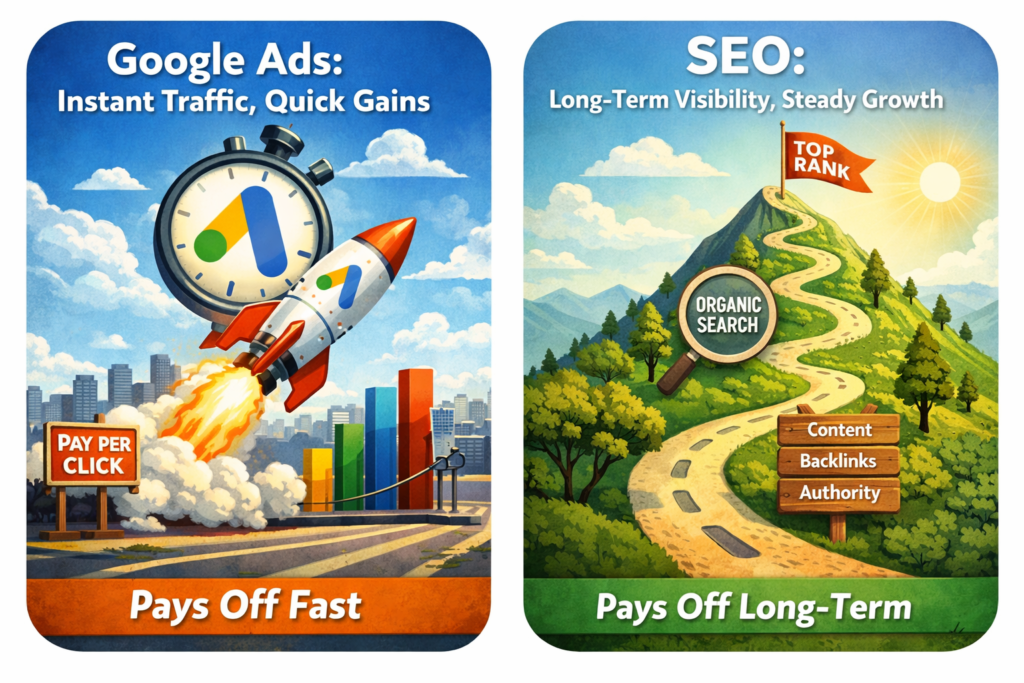
Instead of choosing between SEO and Google Ads, the smartest approach is integration.
Here’s a simple, proven framework:
Use Google Ads for speed and validation
Use SEO for scale, trust, and cost control
Start Ads early to understand which keywords convert. Then, build SEO content around those same themes. Therefore, both channels strengthen each other.
This approach avoids guesswork and maximizes ROI.
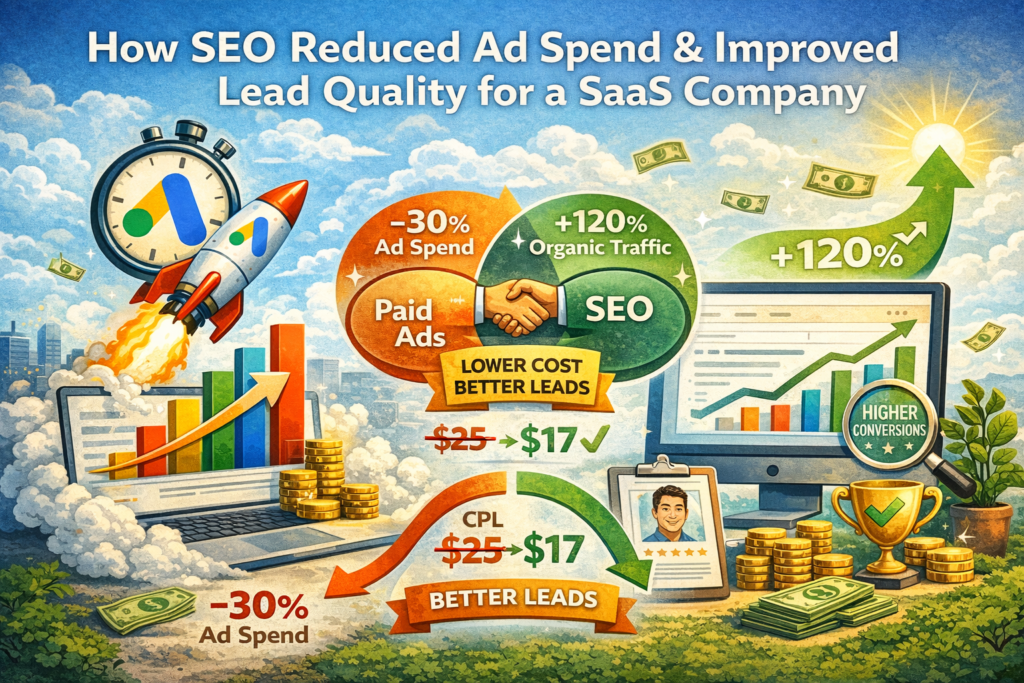
Case Study: How SEO Reduced Ad Spend and Improved Lead Quality for a SaaS Company
Client: A mid-sized SaaS company providing project management tools for small businesses.
Initial Situation:
- The company relied entirely on Google Ads to generate leads.
- Monthly ad spend: $15,000
- Cost per lead (CPL): $25
- Leads were consistent but expensive, and the ads only reached users actively searching transactional keywords like “buy project management software.”
Challenge:
The client wanted to reduce dependency on paid traffic, improve lead quality, and start capturing early-stage prospects who were researching solutions rather than ready to buy.
Strategy Implemented:
- SEO Audit & Keyword Research: Identified gaps in content targeting early-stage decision-makers, such as “how to manage remote teams efficiently” and “project management tools comparison.”
- Content Creation: Produced long-form, authoritative guides and blog posts addressing these queries.
- On-Page & Technical SEO: Optimized site speed, meta descriptions, and internal linking to improve search visibility.
- Integrated Ads & SEO: Targeted high-intent keywords with Google Ads while letting SEO content capture informational and comparison queries.
Results (6 Months):
- Organic traffic increased by 120%, contributing to 40% of total leads.
- CPL decreased from $25 to $17, because paid campaigns could now focus only on high-converting transactional keywords.
- Lead quality improved: SEO-driven leads were better informed and had a higher conversion rate from trial to paid customers.
- Paid ad spend was reduced by 30%, freeing budget for retargeting and strategic campaigns.
Key Takeaway:
Google Ads provided immediate leads, but combining it with SEO stabilized growth, lowered costs, and improved lead quality. The client could scale sustainably without depending solely on paid campaigns.
What Is The Biggest Myth About Google Ads Replacing SEO
The most common misconception I hear is: “Why invest in SEO when Ads already put us on top of Google?”
The reality is simple:
- Ads rent attention
- SEO earns attention
And rented attention is never guaranteed long-term.
Final Answer: Do You Really Need SEO If You Run Google Ads?
Yes—you do.
Google Ads can drive growth quickly. However, SEO ensures that growth is stable, cost-effective, and also scalable.
If you want short-term results only, Ads might be enough. But if you want a business that doesn’t depend entirely on paid traffic, SEO is essential.
Therefore, the smartest businesses don’t choose one.
They use Google Ads to win now and SEO to win consistently.

Leave a Reply