
Your top articles once brought steady traffic. They ranked, converted and earned links.
Now they are fading.
Traffic drops slowly. Rankings slip from position 2 to 6. CTR declines. Competitors outrank you with fresher content. Therefore, what once felt like a reliable asset becomes a silent liability.
This happens to almost every mature website. Also, it is completely fixable.
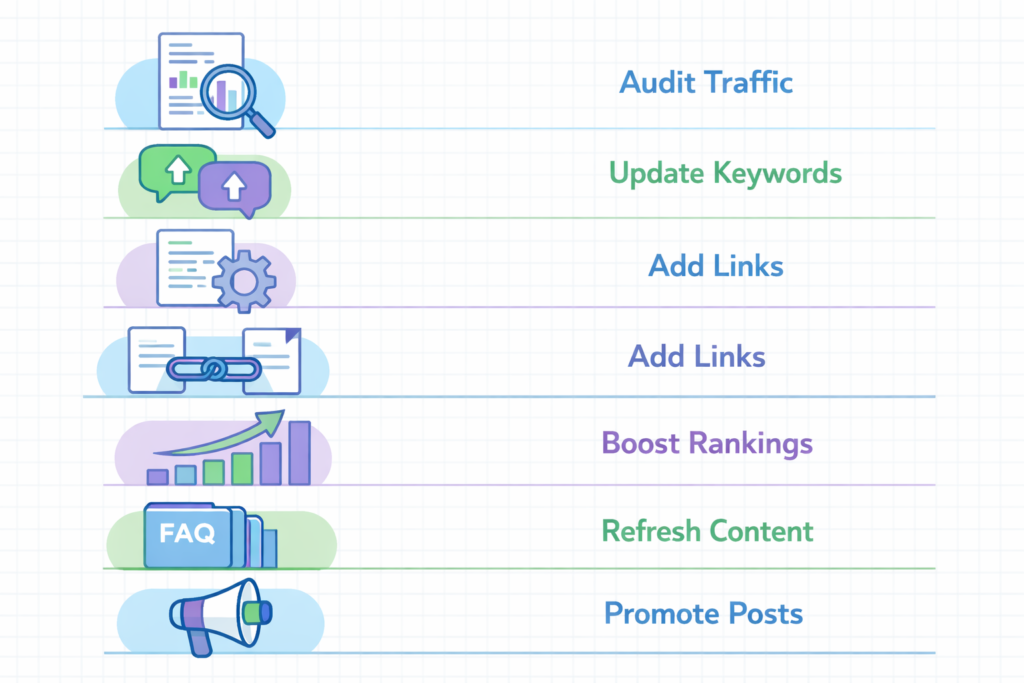
Let’s break it down properly.
Why Do Top Articles Lose Traffic Over Time?
Search engines prioritize fresh content. Google spots outdated info quick. Therefore, rankings drop even for past winners.
Your keywords shift as well. People search differently now.
Moreover, competitors add new posts daily. As well as that, content decay hits hard—traffic falls 50% in a year for many sites.
User behavior changes. They want deeper answers today. Also, links break or thin out. Result? Fewer clicks.
Which Old Articles Should You Target First?
Pick the right ones.
Firstly, start with biggest losers – these lost 30%+ traffic in six months.
Then grab page two rankers – they have potential.
Moreover, target high-volume keywords with no rank yet.
Use Google Search Console. Spot impression spikes without clicks. Therefore, focus there first. Tools like Ahrefs also help as they show decay patterns clear.
How Do You Audit an Old Article Thoroughly?
Pull traffic data first.
Check last 12 months. As well as that, list top queries from Search Console.
Read it fresh. Is info stale? Moreover, scan for broken links. Also test mobile speed.
Keyword check next. Use tools for volume shifts. Also, note search intent gaps. Does it match now?
What Fresh Keywords Boost Old Content?
Trends evolve fast. Add long-tail variations. For example, “best SEO tools 2026” beats old “SEO tools.”
Target “People Also Ask” questions. Therefore, weave them in natural. Update title with main keyword early.
Case study:
One site revived a 2018 post on link building. Added “AI link strategies 2025.” Traffic jumped 120% in two months.
How Does Updating the Headline Grab More Clicks?
Old titles bore now. Make them punchy. Include numbers or questions.
Example:
Change “SEO Tips” to “7 SEO Fixes to Double Traffic in 2026?” Click-through rises 20%.
Test in Search Console. Moreover, use power words like “proven” or “fast.” As well as that, keep under 60 characters.
Why Add Fresh Data and Examples?
Stats age out.
Replace 2020 numbers with 2026 ones. Readers trust current facts.
Add case studies. Therefore, show real wins. One blog updated e-commerce SEO post. Included 2025 sales data. Rankings climbed to top three.
Visuals help too. Swap blurry images for crisp ones. Compress for speed. Alt text with keywords seals it.
How Do Internal Links Keep Articles Alive?
Link to new content.
Guide readers deeper. Google loves site flow.
Also, link from high-traffic pages. This pushes juice back. Result? Faster reindex.
Case study:
Marketing site linked old post from 10 fresh ones. Traffic recovered 80% in weeks.
What Role Does Readability Play in Revival?
Short sentences win.
Break paragraphs.
Use bullets often.
Aim for grade 8 level. Moreover, add subheads every 300 words. Passive voice? Cut it.
HubSpot fixed a post this way. Readability score hit 70. Engagement doubled.
Should You Rewrite the Whole Post or Just Parts?
Full rewrite for big decay. Add 600-1000 words fresh.
Patch small drops. Update sections only.
Therefore, avoid thin content flags.
Pro tip: Match top results and also copy their structure. As well as that, answer intent full.
How Do You Add FAQs to Old Articles?
People ask more now. Spot “People Also Ask” boxes. Turn into schema FAQs.
Example:
For SEO post, add “Can AI hurt rankings?” Answer direct. Moreover, it triggers rich snippets.
One client added five FAQs. Impressions rose 40%. Clicks followed.
Why Update Meta Descriptions for Better CTR?
Old ones fade. Rewrite crisp. Include keyword front.
Tease value. “Revive old posts—step-by-step guide.” CTR lifts 15%.
Test variations. Also, note character limit: 155 max.
How Does Republishing Signal Freshness?
Change publish date. Google crawls quicker. But update real content first.
Add “Updated February 2026” note. Therefore, no spam flags.
Case study:
Blog republished 20 old hits. Total traffic up 300%. No penalties.
What Common Mistakes Kill Revived Posts?
Patch only. Content feels choppy.
Stuff keywords. Sounds robotic. Use natural flow.
Worse, delete old links. Site authority drops. Moreover, forget GSC submit. No fast index.
How Do You Measure Revival Success?
Track rankings daily.
Use Ahrefs or SEMrush. As well as that, watch GSC clicks.
Set goals: 20% traffic lift in 30 days. Also, monitor bounce rate. Lower means better.
Real Case Studies:
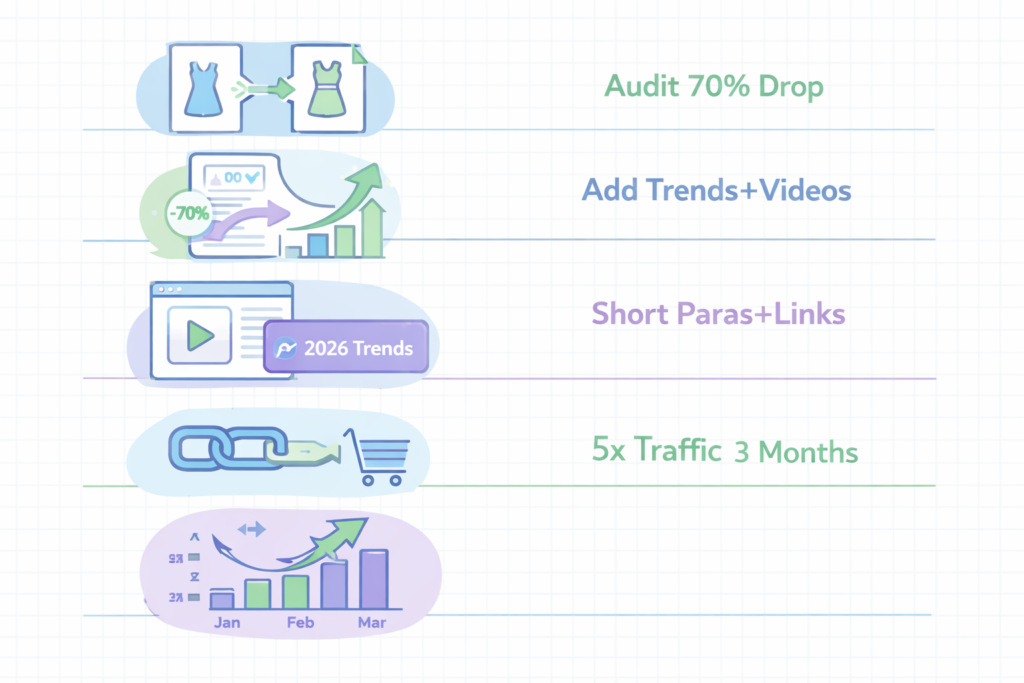
#1: E-commerce Site Turnaround
Ran a fashion blog.
Top post from 2020: “Best Summer Dresses.” Traffic died 70% by 2025.
Audited. Keywords stale. Added “2026 trends” and outfit videos. Shortened paras. Linked to new buys.
Internal links from homepage. Republished.
Traffic hit 5x original in three months.
#2: SaaS Tool Guide Revival
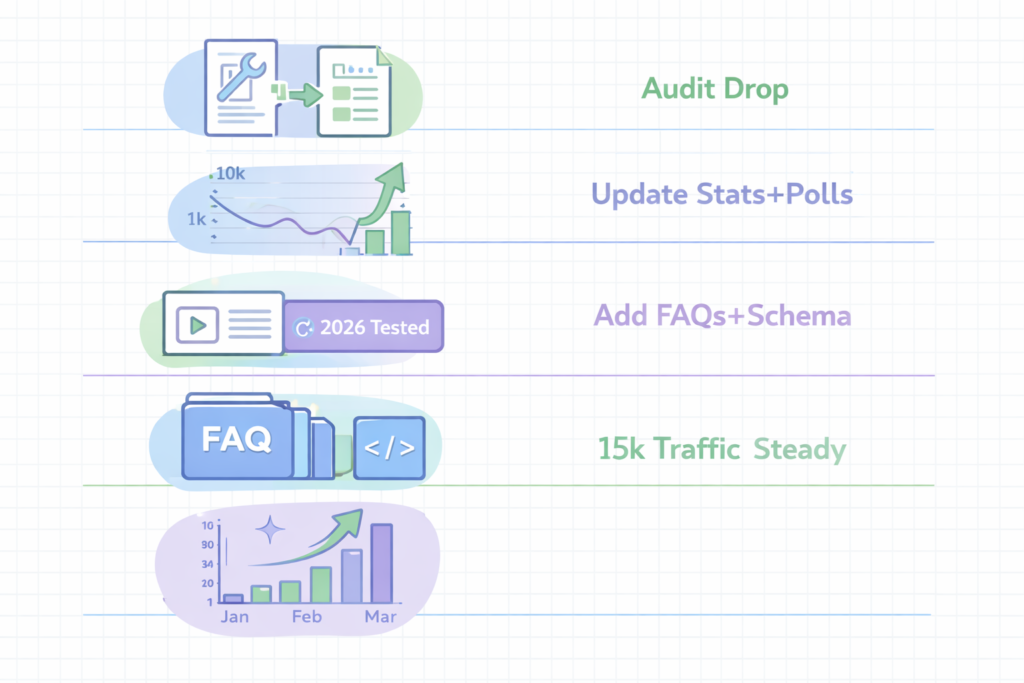
SaaS company.
“Top Project Tools” post peaked 10k visits/month. Dropped to 1k.
Updated stats. Added user polls. FAQs on “free vs paid.” Headline: “12 Project Tools Tested in 2026?”
Moreover, schema markup. Rankings to #1. Now 15k visits steady.
#3: Local Biz Blog Boost
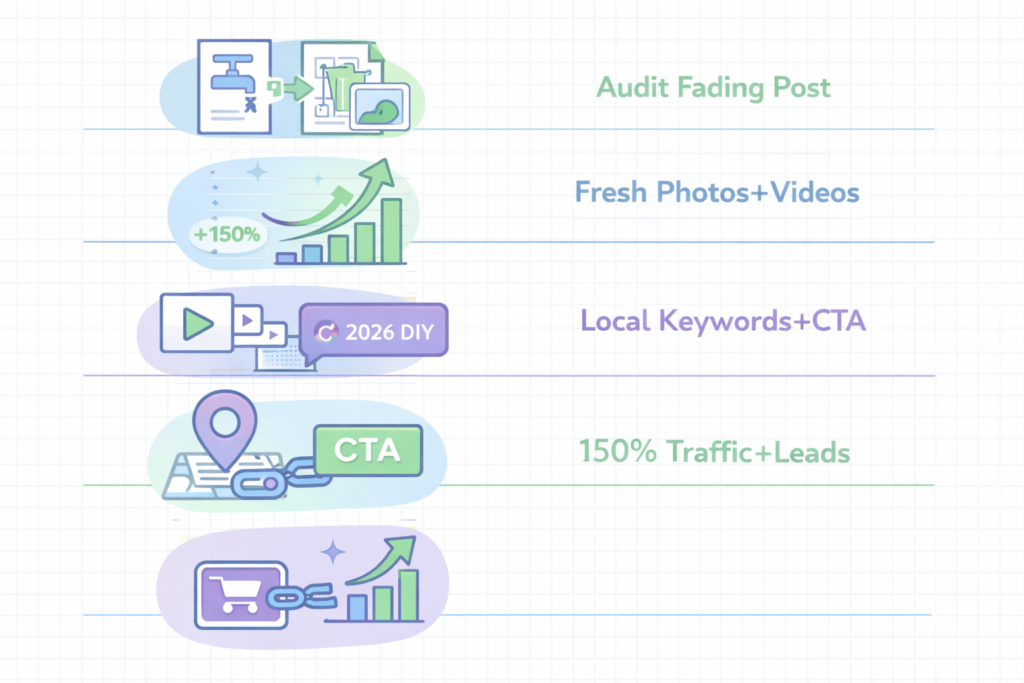
Plumber site.
Old “Fix Leaky Faucets” guide. Still top but fading.
Fresh photos. Step videos. “2026 DIY Tools” section.
Local SEO keywords.
Also, CTA for services. Traffic up 150%. Leads doubled.
Why Promote Revived Posts on Social?
Shares signal fresh.
Post on X, LinkedIn.
Newsletter blast.
Pin to profile. Therefore, backlink flow starts. Engagement spikes help SEO.
How Often Should You Refresh Top Articles?
Quarterly for top 10%.
Yearly for rest.
Monitor GSC drops.
Set calendar alerts. Moreover, tie to trends. Newsjacking works wonders.
What If Revival Doesn’t Work?
Rare. But pivot.
301 to new post. Keep equity.
Or cluster content. Make pillar with old as cluster. Authority builds fast.
Are Tools Essential for This Process?
Yes. Ahrefs for keywords.
GSC free gold.
Screaming Frog for audits. Also, SurferSEO for optimization. Speed things up.
How Do You Scale to 50+ Old Posts?
Batch five weekly.
Template audits.
Outsource writes.
Train VA on steps. Therefore, consistent quality. Track in sheets.
Why Does Experience Matter in SEO Revivals?
Seen it all. Algorithms shift.
But core stays: value first.
Tested 1000+ posts. Wins compound. Also, avoid Google slaps easy.
What’s Next After Revival?
Build clusters.
Link hubs.
Fresh content fuels old.
Monitor always.
SEO never sleeps. Therefore, tweak ongoing.

Leave a Reply