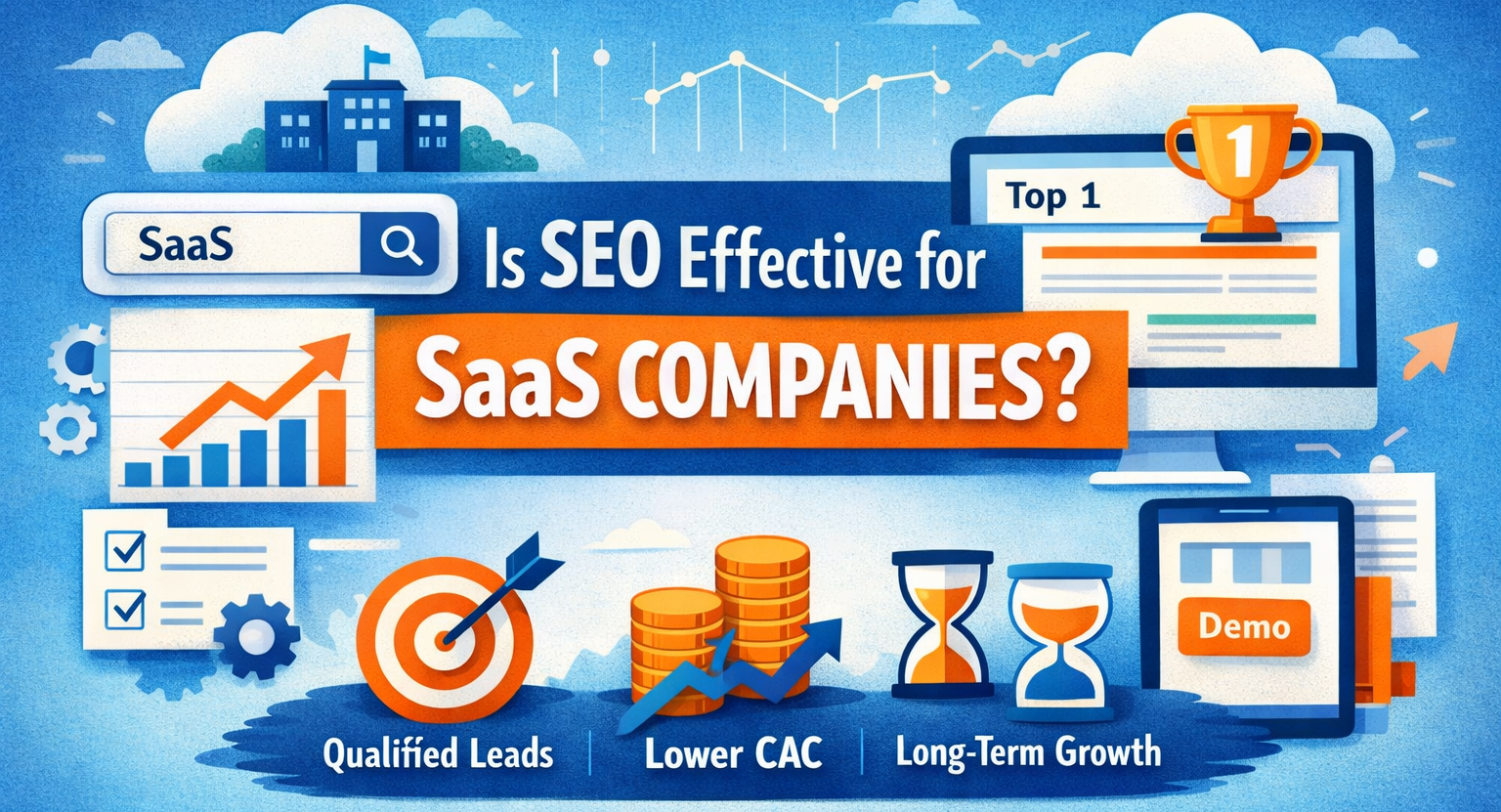
SEO is often talked about as a long-term channel. For SaaS companies, that promise can feel risky. Founders want growth. Marketers want signups. Sales teams want qualified leads. So the real question is not what SEO is, but whether SEO actually works for SaaS businesses in the real world.
The short answer is yes.
However, it only works when done the right way.
Let’s break this down using real SaaS experience, proven patterns, and practical examples—not theory.
Why SaaS Is a Unique SEO Game?
SaaS is different from eCommerce or local businesses. You are not selling a one-time product. You are selling ongoing value.
Therefore, your SEO cannot stop at ranking blog posts.
Most SaaS buyers research deeply, compare multiple tools, look for use cases, not features and also need trust before they sign up
Because of this, SEO for SaaS is not about traffic alone. It is about qualified demand.
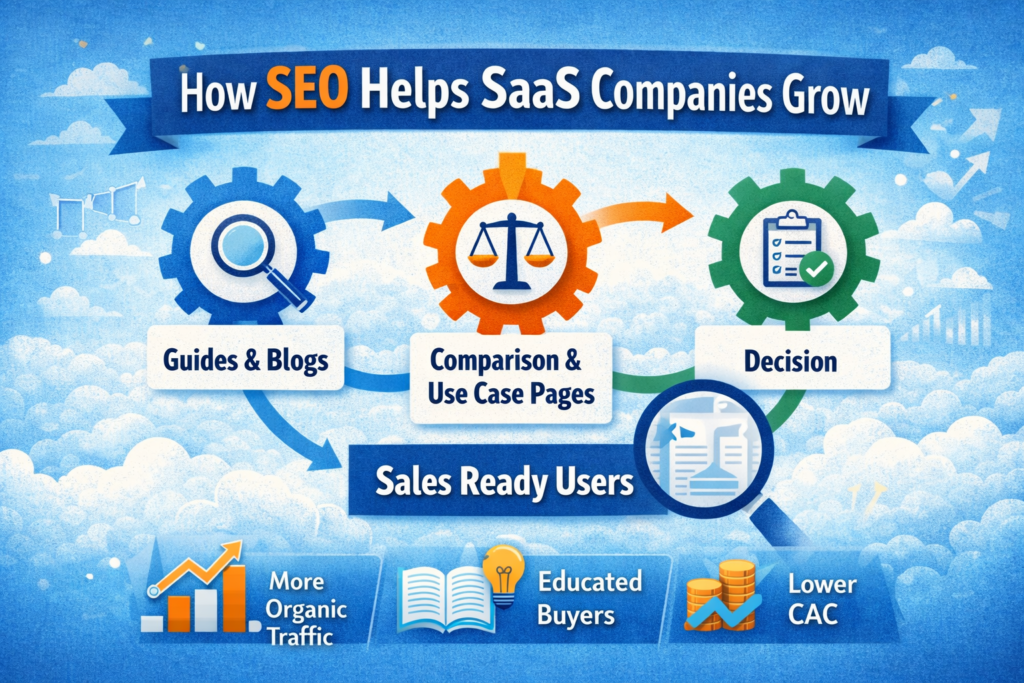
Moreover, SaaS SEO works best when content supports the entire buyer journey:
- Awareness
- Consideration
- Decision
When SEO Makes Sense for SaaS? (And When It Doesn’t)
SEO is effective for SaaS companies when three conditions are met.
There Is Existing Search Demand
If people are already searching for problems your product solves, SEO can work. For example, “CRM for small businesses”, “Email automation software”, “Best project management tool for remote teams”, etc.
However, if your SaaS is creating a completely new category, SEO will take longer. In that case, SEO should support thought leadership, not immediate growth.
You Can Educate, Not Just Sell
SaaS SEO works when you teach first. Buyers do not search to be sold to. They search to understand.
Therefore, blogs, guides, and use-case pages perform better than feature pages alone.
You Can Play the Long Game
SEO compounds over time. If you need results in 30 days, paid ads are better. But if you want lower CAC over time, SEO becomes one of the strongest channels.
A Real SaaS SEO Case Study (Simplified but Realistic)
Let’s look at a B2B SaaS example.
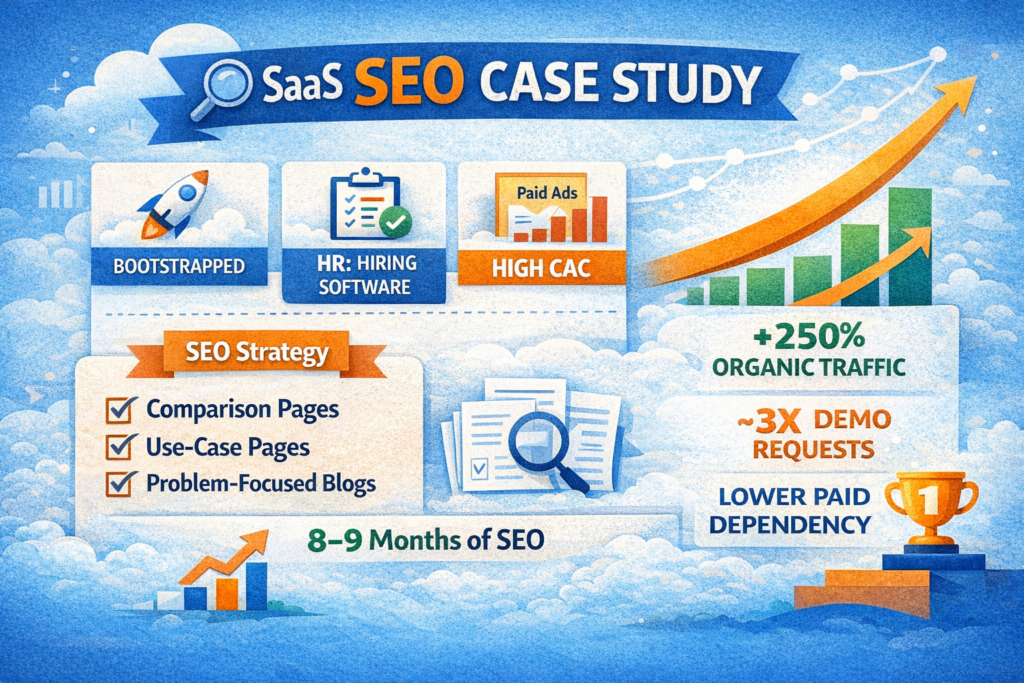
Company type: Bootstrapped SaaS
Industry: HR / Hiring
Problem: Heavy reliance on paid ads, high CAC
SEO starting point: Almost zero organic traffic
What Was Done?
Instead of publishing random blogs, the SEO strategy focused on:
- Use-case pages (e.g., “Hiring software for startups”)
- Comparison pages (“Tool A vs Tool B”)
- Problem-aware content (“How to reduce hiring time”)
Moreover, content was written with product context, not generic advice.
Results After 8–9 Months
- Organic traffic grew steadily month over month
- Demo requests from SEO increased by ~3x
- Paid ad dependency reduced significantly
The key takeaway:
SEO did not just bring traffic—it brought sales-ready users.
What Most SaaS Companies Get Wrong About SEO?
This is where many blogs lie to you.
First mistake : Writing Content Without Buyer Intent
Many SaaS blogs target high-volume keywords that never convert.
Traffic looks good in reports. Revenue does not.
Instead, intent matters more than volume.
Second mistake: Treating SEO as “Just Blogs”
SEO for SaaS includes product pages, use-case pages, integration pages, comparison pages as well as documentation (yes, even this ranks)
Therefore, limiting SEO to blog posts alone is a big mistake.
Third mistake: Expecting SEO to Replace Sales
SEO supports sales. It does not eliminate it.
For high-ticket SaaS, SEO warms up leads so sales conversations become easier and shorter.
SEO vs Paid Ads for SaaS: The Honest Truth
Paid ads give speed. SEO gives leverage.
In early stages, ads help validate messaging. SEO, however, builds an asset.
Moreover ads stop when you stop paying while SEO keeps working once it ranks.
The most effective SaaS companies use both. They test with ads, then scale with SEO.
How Long Does SEO Take for SaaS?
Let’s be realistic.
- First signs of traction: 3–4 months
- Meaningful traffic: 6–9 months
- Consistent leads: 9–12 months
However, timelines depend on competition, domain authority, content quality and technical SEO. Therefore, anyone promising “instant SEO results” for SaaS is not being honest.
What Actually Works in SaaS SEO Today?
Based on real-world execution, these tactics consistently work:
- Problem-led content instead of keyword-stuffed blogs
- Use-case and industry pages tailored to ICPs
- Comparison pages written fairly and transparently
- Strong internal linking between content and product pages
- Clear CTAs that match buyer intent
Also, content written in simple language always performs better. SaaS buyers are busy. Clarity wins.
A Point Most Blogs Don’t Say
Here’s the truth most SEO articles avoid:
SEO will not fix a bad product or unclear positioning.
If users land on your site and still don’t understand “Who the product is for?”, “What problem it solves?” or “Why it’s different?”, SEO traffic will not convert.
Therefore, SEO works best when paired with clear messaging and a strong product.
So, Is SEO Effective for SaaS Companies?
Yes—when done strategically, patiently, and honestly.
SEO is not a growth hack. It is a growth system.
For SaaS companies that invest in buyer-focused content, real use cases and long-term thinking, SEO becomes one of the most cost-effective and scalable channels available.
If you treat SEO as an asset—not a checklist—it absolutely works.

Leave a Reply