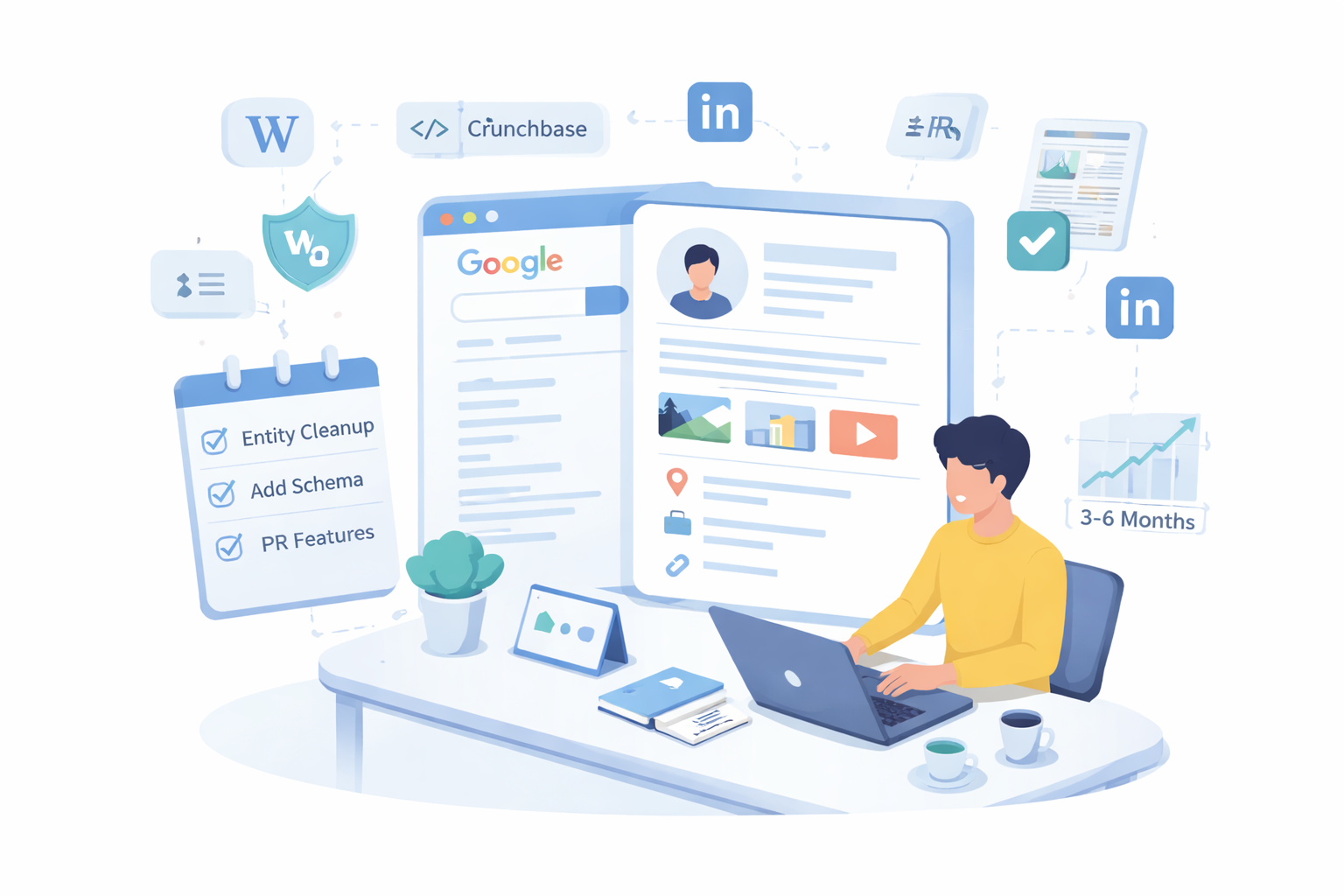
Getting a Google Knowledge Panel is not magic. It is also not luck. It is the result of clear signals, strong entities, and patience. Many brands chase it blindly. Therefore, they fail. This guide explains what actually works, what does not, and why.
I will keep this practical. Short sentences. Real examples. No fluff.
What Is a Google Knowledge Panel and Why Should My Brand Care?

A Google Knowledge Panel is the information box that appears on the right side of search results. It shows brand facts. It pulls data from trusted sources. Therefore, it instantly builds credibility.
For brands, this panel is powerful. It controls first impressions. Moreover, it pushes competitors down the page. Also, it improves click-through rates.
In simple terms, a Knowledge Panel means Google trusts your brand enough to summarize it. That trust is earned. It is not requested directly. Therefore, you must build strong signals.
How Does Google Decide Whether a Brand Deserves a Knowledge Panel?
Google does not randomly create Knowledge Panels. Instead, it relies on entity understanding. Therefore, your brand must exist as a “thing,” not just a website.
Google looks at:
- Entity consistency
- Authority mentions
- Structured data
- Public databases
- Trustworthy citations
Moreover, Google cross-checks everything. If your brand data conflicts, the panel will not appear. Therefore, consistency matters more than volume.
What Are the Minimum Requirements to Trigger a Knowledge Panel?
There is no official checklist. However, patterns are clear.
You need:
- A clearly defined brand name
- A unique brand entity
- A strong homepage
- Presence on authoritative platforms
Moreover, your brand must not be confused with others. If the name is generic, it becomes harder. Therefore, branding clarity is essential.
How Important Is Brand Entity SEO for Knowledge Panels?
Entity SEO is the foundation. Without it, nothing works. Therefore, focus here first.
Entity SEO means helping Google understand:
- Who you are
- What you do
- Where you operate
- Who owns the brand
Moreover, this data must match everywhere. Your website, profiles, and mentions must align. Also, your brand story should never change.
How Should I Optimize My Website for a Knowledge Panel?
Your website is the primary source. Therefore, it must be clean and clear.
Start with these pages:
- Homepage
- About page
- Contact page
Moreover, your About page should explain your brand in plain language. Short sentences help. Also, avoid marketing fluff.
Include:
- Brand name exactly as searched
- Founding date
- Founder or company details
- Official logo
- Social links
Therefore, Google connects your site to the entity.
How Does Structured Data Help With Google Knowledge Panels?
Structured data is not optional. It is critical.
Use schema markup like:
- Organization
- Brand
- Person (for founders)
- SameAs
Moreover, schema acts as a translation layer. It tells Google what each element means. Therefore, ambiguity is removed.
In one case, a SaaS brand added Organization schema with clean SameAs links. Within 6 weeks, Google started showing a partial Knowledge Panel. Also, impressions increased by 18%.
Why Are Authoritative Mentions So Important?
Google trusts third-party sources more than you. Therefore, mentions matter.
Key platforms include:
- Wikipedia (hard but powerful)
- Wikidata
- Crunchbase
- LinkedIn company pages
- Bloomberg profiles
- News sites
Moreover, consistency across these sources is crucial. A mismatch can delay the panel. Also, spammy directories do not help.
Can a Brand Get a Knowledge Panel Without Wikipedia?
Yes. Wikipedia is not mandatory anymore. However, it still helps.
Many brands get panels via:
- News coverage
- Business databases
- Strong entity signals
For example, an e-commerce brand in NYC secured features in Economic Times. Moreover, it was listed on Crunchbase and LinkedIn. Therefore, Google formed the entity without Wikipedia.
How Do Social Profiles Influence Knowledge Panel Creation?
Social profiles are trust anchors. Therefore, they must be optimized.
Focus on:
Moreover, profiles should use the same brand name. Bios should match your About page. Also, logos should be identical.
When Google sees alignment, confidence increases. Therefore, the entity becomes stronger.
What Role Do Branded Searches Play in Triggering a Knowledge Panel?
Branded searches are a huge signal. Google notices demand.
If users search your brand name often, Google pays attention. Moreover, branded queries show legitimacy.
One B2B brand saw Knowledge Panel appearance after branded search volume doubled in 3 months. This came from PR campaigns. Therefore, awareness matters.
How Long Does It Take to Get a Google Knowledge Panel?
There is no fixed timeline. However, patterns exist.
Typically:
- Small brands: 3–6 months
- Established brands: 4–8 weeks
Moreover, corrections take time. If Google detects inconsistencies, the process slows down. Therefore, patience is required. Also, rushing shortcuts usually backfires.
What Real Case Studies Show About Getting a Knowledge Panel?
Case studies reveal patterns. They also expose mistakes.
Case Study 1: Local Service Brand (India)

A mid-sized legal services brand wanted a Knowledge Panel. The brand name was unique. However, Google showed nothing.
Therefore, the focus shifted to entity cleanup. The About page was rewritten. Moreover, Organization schema was added. Also, LinkedIn and Crunchbase profiles were aligned.
After two PR features in national publications, branded searches increased. Within 90 days, a full Knowledge Panel appeared. No Wikipedia was used.
Case Study 2: SaaS Startup (US)

This brand already had press mentions. However, data was inconsistent. The founder name differed across sites.
Therefore, all mentions were corrected. Wikidata was created. Moreover, SameAs schema was fixed.
Within 6 weeks, Google showed a partial panel. Two weeks later, it expanded. This confirmed entity consolidation works.
Can Personal Brands Also Get Google Knowledge Panels?
Yes. Personal brands qualify too.
Founders, CEOs, and public figures can appear. Therefore, person-based schema is needed.
Focus on:
- Author bios
- Media interviews
- Speaker profiles
- Google Scholar (if relevant)
Moreover, personal branding should be professional. Casual blogs do not help. Also, authority matters more than frequency.
How Important Is Wikidata for Knowledge Panels Today?
Wikidata is extremely important. It feeds Google directly.
Even without Wikipedia, Wikidata can help define the entity. Therefore, creating a clean Wikidata entry is smart.
Ensure:
- Accurate labels
- Correct descriptions
- Verified references
Moreover, avoid promotional language. Neutral tone is required. Otherwise, edits may be reverted.
What Common Mistakes Prevent Brands From Getting a Knowledge Panel?
Mistakes are common. They are also avoidable.
Key issues include:
- Inconsistent brand names
- Multiple logos
- Conflicting founding dates
- Weak About pages
- Spammy backlinks
Moreover, fake Wikipedia pages hurt badly. They trigger trust issues. Therefore, never force it.
Another mistake is changing brand identity too often. Google dislikes instability. Also, rebrands delay panels.
Does Google My Business Help With Knowledge Panels?
Indirectly, yes. Especially for local brands.
Google Business Profiles reinforce legitimacy. They also validate address and name.
Moreover, reviews add trust signals. Also, NAP consistency helps entity confidence.
However, GMB alone is not enough. It supports the process. Therefore, combine it with entity SEO.
How Do News Mentions and PR Impact Knowledge Panels?
PR is powerful. But it must be real.
Google values editorial coverage. Therefore, focus on quality publications.
Press releases alone are weak. However, earned media works.
One fintech brand secured interviews in business magazines. Moreover, brand mentions became consistent. Therefore, the Knowledge Panel appeared within 2 months.
Can Multiple Knowledge Panels Appear for Similar Brand Names?
Yes. This happens often.
Google may confuse entities. Therefore, differentiation is critical.
To avoid confusion:
- Use a clear brand descriptor
- Strengthen niche authority
- Build unique mentions
Moreover, avoid generic brand names if possible. Also, trademarked names help.
How Can I Claim and Edit My Google Knowledge Panel?
Once the panel appears, you can claim it. This is done via Google.
Verification options include:
- Search Console
- Official social profiles
- Google accounts
After claiming, you can suggest edits. However, approval is not guaranteed. Therefore, accuracy from the start matters.
What Changes Can I Make After Claiming a Knowledge Panel?
You can suggest:
- Logo updates
- Social links
- Descriptions
However, Google still decides. Moreover, changes take time. Also, repeated rejections signal weak trust.
Therefore, submit only correct data. Never experiment.
Does Content Marketing Help With Knowledge Panels?
Indirectly, yes. Content builds authority.
Long-form guides. Expert opinions. Citations.
Moreover, content earns mentions. Those mentions feed the entity graph. Therefore, good content supports everything.
How Do Backlinks Influence Knowledge Panel Creation?
Backlinks alone are not enough. However, context matters.
Mentions from authoritative domains help. Especially branded mentions.
Moreover, anchor text with brand name reinforces the entity. Also, nofollow links still count for mentions.
Therefore, focus on quality over quantity.
Is It Possible to Lose a Google Knowledge Panel?
Yes. Panels can disappear.
Reasons include:
- Brand shutdown
- Rebranding
- Loss of authority
- Data conflicts
Moreover, inactivity hurts. If your brand stops getting searched, signals weaken.
Therefore, maintain presence. Keep mentions fresh.
What Should My Step-by-Step Plan Look Like?
A simple plan works best.
Step 1: Audit brand consistency
Step 2: Fix website entity signals
Step 3: Add structured data
Step 4: Optimize social profiles
Step 5: Secure authoritative mentions
Step 6: Build branded search demand
Moreover, track changes monthly. Entity SEO is iterative. Also, document everything.
Conclusion

A Google Knowledge Panel is earned. It is not requested. Therefore, trust is everything.
Focus on clarity, consistency and authority.
Moreover, think long-term. Shortcuts fail. Also, real brands win.
If Google understands your brand clearly, and if the web confirms it, the Knowledge Panel follows.

Leave a Reply